
Basement seepage happens when water in the surrounding soil finds a way through the basement walls or floor. In Singapore, that can affect a landed-house basement as well as a condo basement carpark or storeroom. Water usually gets in at weak points such as construction joints, cracks, pipe or service openings, and cove joints where the wall meets the floor. Heavy monsoon rain and a high water table after rain keep the ground wet, which is when seepage tends to show. Finding the source comes first, before any repair is chosen.
Key takeaways
| Point | What it means for you |
|---|---|
| Basements sit in wet ground | Soil around a basement can stay saturated after heavy monsoon rain, and a high water table pushes against the walls and floor |
| Water enters at weak points | Construction joints, cracks, tie-rod holes, pipe or service openings and cove joints (where the wall meets the floor) are the usual paths |
| Not every damp patch is a leak | Condensation and seepage look similar but need different fixes |
| Diagnosis comes first | Moisture readings and a close look at joints, cracks and openings show where water is getting in |
| The fix depends on the cause | Surface sealing, injection into cracks and structural repair each suit a different problem |
What is basement seepage?
Basement seepage is water from the surrounding ground moving through a basement’s walls or floor slab. It can appear as damp patches, a wet line along the bottom of a wall, peeling paint, white salt stains or, in worse cases, water trickling through a crack. It differs from a burst pipe because it comes from outside the structure.
Because a basement is below ground on several sides, the walls and floor are in contact with soil that can hold a lot of water. When that water is pressing against the concrete, it is called hydrostatic pressure, meaning the pressure of water that is not moving. The more water in the soil, the harder it pushes, and the more likely it is to find a gap.
Is basement seepage normal?
Some damp can appear in a Singapore basement, especially after heavy rain or in humid weather, because the walls and floor sit against wet ground. Active seepage is not normal. Water through cracks or joints, tide lines, salt stains, or patches that worsen after rain should be traced to the source.
A little surface moisture that wipes away and returns in humid weather may be condensation, which is a ventilation issue rather than a leak. Seepage that leaves salt marks, follows a crack or joint, or tracks with the monsoon is water entering from outside, and it should not be treated as routine damp.
What causes basement seepage in Singapore?
Basement seepage in Singapore is usually caused by water in the soil pressing against the walls and floor after heavy monsoon rain, when the water table is high. It gets in at construction joints, cracks, cove joints where the wall meets the floor, and pipe or service openings. This applies to landed-house basements and to condo basement carparks and storerooms.
Water in the soil pushes against the walls and floor
After heavy monsoon rain, the ground around a basement can stay wet for days and the water table can rise. If the water level in the soil rises above part of the basement floor, water presses sideways against the walls and upwards against the slab. That is why basement water can come up through the floor, not just down a wall.
Construction joints and cold joints
Basements are rarely cast in one go. Where one pour of concrete meets the next, there is a joint. A cold joint forms when fresh concrete is placed against concrete that has already started to set. If these joints were not sealed well during construction, they are an easy path for water under pressure.
Cracks and tie-rod holes
Concrete shrinks slightly as it cures and moves with temperature and ground conditions over time, so fine cracks are common. Tie-rod holes, left where the formwork was held in place, should be sealed during construction. Either can let water through once the soil outside is wet enough.
Pipe and service openings
Wherever a pipe, drain, cable or other service passes through a basement wall or floor, there is a joint between two different materials. Sealant around these openings can shrink or come loose over time. Damp patches that form around a pipe or service entry are a common sign.
Cove joints (where the wall meets the floor)
The cove joint is the corner where the basement wall meets the floor slab. It is often a joint between two separate pours, and it is also where water collects if it is already inside. A damp or stained strip along the bottom of the walls, or tiles lifting along the edge, often points here.
How can you tell seepage from condensation?
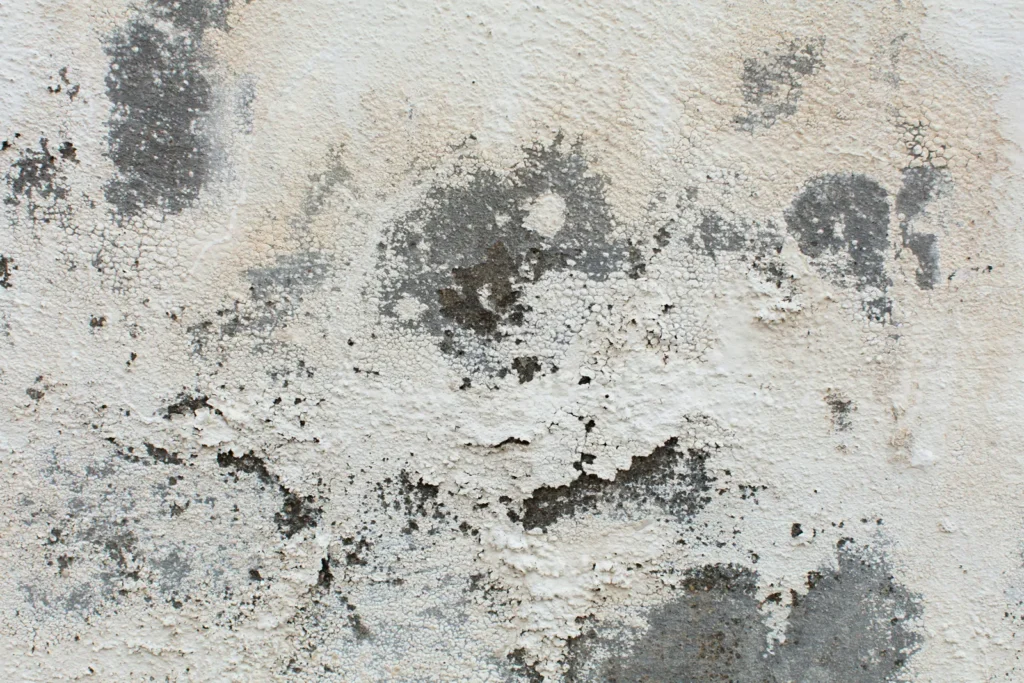
Condensation forms when warm, humid air meets a cooler surface, so it appears as an even film of moisture that wipes off and returns in humid weather. Seepage is usually patchy, concentrated at joints, cracks or low on the walls, gets worse after rain and often leaves white salt marks or tide lines.
| What you see | Condensation | Seepage |
|---|---|---|
| Where the damp is | Spread evenly over cool surfaces, including pipes and metal | Concentrated at joints, cracks, pipe openings or the base of walls |
| When it gets worse | During humid weather or when the space is closed up | After heavy or prolonged rain |
| What it leaves behind | Water droplets that wipe away | Tide lines, white powdery salt stains, peeling or bubbling paint |
| What helps | Ventilation and a dehumidifier | Finding and sealing where water gets in |
Rising damp is a third possibility. It is moisture drawn up through porous masonry from the ground, and it usually shows as a band of damp and salt marks near the floor. White powdery stains of any kind are efflorescence, the salts left behind as water dries out of concrete. They tell you water is moving through the wall itself.
Where does basement seepage usually show up?
Seepage tends to show up near where it gets in, but water can also travel along a joint or under floor finishes before it appears. The most common places are along the base of the walls, around pipe and cable openings, at construction joints running across a wall or floor, and in corners.
The pattern is similar in a landed-house basement, a condo carpark and a basement storeroom.
| Where you see it | What it often points to |
|---|---|
| A damp or stained strip along the bottom of the walls | The cove joint, where the wall meets the floor |
| A straight line of damp across a wall or floor | A construction joint |
| Damp patches around a pipe or cable entry | A failed seal around the opening |
| A thin line of damp or salt along a crack | A crack carrying water under pressure |
| Water coming up through floor tiles or the slab | Pressure from below, or water travelling under the floor finish |
| Damp near a light well, stairway or ventilation opening | Rainwater getting in from above ground, not necessarily seepage |
What happens if basement seepage is left alone?
Seepage tends to spread rather than fix itself. Over time it can damage paint, plaster, flooring and anything stored on the floor, encourage mould and a musty smell, and leave salt deposits that break down surfaces. If water reaches the steel reinforcement, rust can make the concrete crack and flake, which is known as spalling.
| What happens | Why it matters |
|---|---|
| Paint and plaster bubble or flake | Finishes have to be redone, and repainting over damp rarely lasts |
| Floor finishes lift or stain | Tiles can lose their bond and timber or vinyl can warp |
| Mould and a musty smell | Affects how the space can be used, especially for storage, a study or a gym |
| Stored items get damp | Boxes, furniture and electronics on the floor are at risk |
| Steel reinforcement rusts | Rust expands, which can crack and flake the concrete (spalling) |
How is basement seepage diagnosed?
A proper diagnosis maps where the basement is damp, how damp it is and how that changes with the weather. That usually means moisture meter readings across the walls and floor, and a close look at joints, cracks, cove joints and pipe openings. The aim is to find where water is getting in before choosing a repair.
| Diagnostic step | What it shows |
|---|---|
| Moisture meter (an instrument that reads how damp a surface is) | Where the dampness is strongest and how far it has spread |
| Close inspection of construction joints, cracks, cove joints and pipe openings | The likely entry points |
| Checking whether readings change after rain | Whether it is seepage from outside or condensation from inside |
| Questions about the history | When it started, past repairs and any renovation work nearby |
This step stops money being spent on the wrong fix. Even, surface-wide dampness that turns out to be condensation needs ventilation, not waterproofing. A high reading concentrated at one joint needs that joint treated, not the whole room coated.


How can I permanently stop a basement leak?
A lasting fix depends on treating the actual entry point, not on painting over the damp. Once the source is found, that may mean injecting a crack or joint, or renewing the waterproofing system on the wet side where it can be reached. Coating a wet surface without stopping the water usually fails again.
The wet side is the face of the wall or slab that is in contact with the soil. Where that face can be reached, renewing the waterproofing there deals with water before it enters the structure. Where it cannot, work from the inside, such as high-pressure PU injection into a crack or joint, is used to fill the path the water is taking.
No single coating or paint can be relied on for every case. The right method depends on what the diagnosis finds, which is set out below.
How do I fix water seeping through my basement floor?
Water seeping through a basement floor usually enters at a crack or joint in the slab, at the cove joint where the wall meets the floor, or under pressure from the wet ground below. Find that entry point first. Treat the source, for example by injecting the crack or joint, rather than only coating the floor.
Water can also travel under tiles or screed and appear some distance from where it entered. If the floor finish is hollow or the screed has debonded, the tiles and screed may need to be lifted and relaid, with waterproofing as part of that work. A surface coating alone will not help if water is still coming through a joint or from below.
Which repair suits which kind of basement seepage?
The repair should match what the diagnosis finds. General dampness through sound concrete can often be sealed without hacking. Water coming through specific cracks or joints usually needs injection to fill them from inside. Cracks that are widening, failed concrete or spalling need structural repair first, with waterproofing afterwards.
| What the diagnosis finds | Approach that usually suits | Disruption |
|---|---|---|
| Damp through sound walls and floors | A penetrating nano coating that seals the surface from within | Low; no hacking |
| Water coming through specific cracks or joints | High-pressure PU (polyurethane) injection, where resin is pumped into the crack to fill it from inside | Low to moderate; small injection points are drilled |
| Widening cracks, spalling or failed concrete | Structural repair, then waterproofing | Higher; depends on the extent of the damage |
| Hollow floor tiles or debonded screed | Lifting and relaying the floor, then waterproofing | Higher; tiles and screed are removed |
| Condensation | Ventilation and dehumidification | Low; no waterproofing needed |
Sometimes the honest answer is that a less invasive option will not last, and a good contractor should tell you when that is the case. For the methods and what each involves, see our basement waterproofing page and our guide to hacking vs non-hacking waterproofing.
The Singapore Standard for waterproofing reinforced concrete buildings, SS 637:2018, covers basements, including water under pressure and moisture from the ground. It is worth asking any contractor how their proposed system relates to it.
What can you do before the survey?
You can help the diagnosis by recording where the damp appears, taking dated photos, and noting whether it changes after rain. Lift stored items off the floor and run a dehumidifier if the air is humid. For a landed house, keep the surface drains around the house clear after heavy rain.
A few things to avoid:
- Painting over the damp. It hides the pattern and usually blisters or peels again.
- Sealing a crack with a household filler. Water under pressure often finds a way around it, and it can make the crack harder to treat properly later.
- Leaving stored items against the walls. Air needs to move, and items can hide new damp.
Getting basement seepage checked
If your basement stays damp after rain or the same patches keep coming back, it is worth having the source traced before anything is painted, sealed or hacked. Costs depend on the cause and the extent of the work, and a free on-site assessment from Atlas Works gives the quote. WhatsApp us on +65 8800 0567 or book a site survey. If you are looking at the whole house rather than the basement alone, our guide to landed property waterproofing covers roofs, bathrooms and other areas. For damp walls above ground, see wall seepage repair.
Frequently asked questions
Can I paint over basement seepage?
Not as a fix. Ordinary paint, and many waterproof paints, sit on the surface. When water is pushing through the wall from behind, they tend to blister and peel. Painting also hides the pattern of damp, which makes the source harder to find. Repaint only after the cause has been dealt with.
Will a dehumidifier fix basement seepage?
A dehumidifier helps with condensation and keeps the air drier, which reduces mould and smells. It does not stop water coming through the walls or floor. If the damp is concentrated at joints or cracks, or gets worse after rain, the source still needs to be found and sealed.
Does basement seepage get worse during the monsoon?
It often shows more during long spells of heavy rain, when the ground stays wet. In Singapore, that includes the Northeast Monsoon (December to March) and the Southwest Monsoon (June to September), as well as the thunderstorms common in the months between. Note when your damp appears, as it helps with diagnosis.
Should I check the basement before buying a landed home?
Yes, it is worth looking closely. Check for tide lines, white salt stains, fresh paint in only one area, musty smells and lifting floor tiles, and ask the seller about past leaks and repairs. If anything looks doubtful, arrange an inspection before you commit.