
Balcony drainage problems usually come down to one of four things: the floor does not slope enough towards the outlet, the floor trap or outlet is blocked, a renovation has changed the floor levels, or something on the balcony is holding water back. Water that sits after rain soaks into grout and joints, and over time it can find its way into your home or the unit below.
Key takeaways
| Point | What it means for you |
|---|---|
| Pooling is usually a drainage fault | Water that sits after rain points to the slope, the outlet or a blockage, not just the waterproofing |
| Small puddles still matter | Water that stays for hours keeps soaking into grout, joints and the screed underneath |
| Some fixes are simple | Clearing the floor trap or moving planters can solve minor pooling |
| Some need a contractor | Correcting the floor slope or adding an outlet means work on the screed (the cement layer under the tiles) |
| Drainage comes before waterproofing | Waterproofing does not change how water flows, so a coating over a badly sloped floor will be under constant strain |
Why does water pool on my balcony after rain?
Water pools on a balcony when it cannot reach the outlet quickly. The most common reasons are a floor with too little slope, a blocked floor trap or outlet, floor levels changed during renovation, and planters, mats or furniture holding water back. Pooling is often worst after the heavy afternoon thunderstorms Singapore gets through much of the year.
The floor does not slope enough towards the outlet
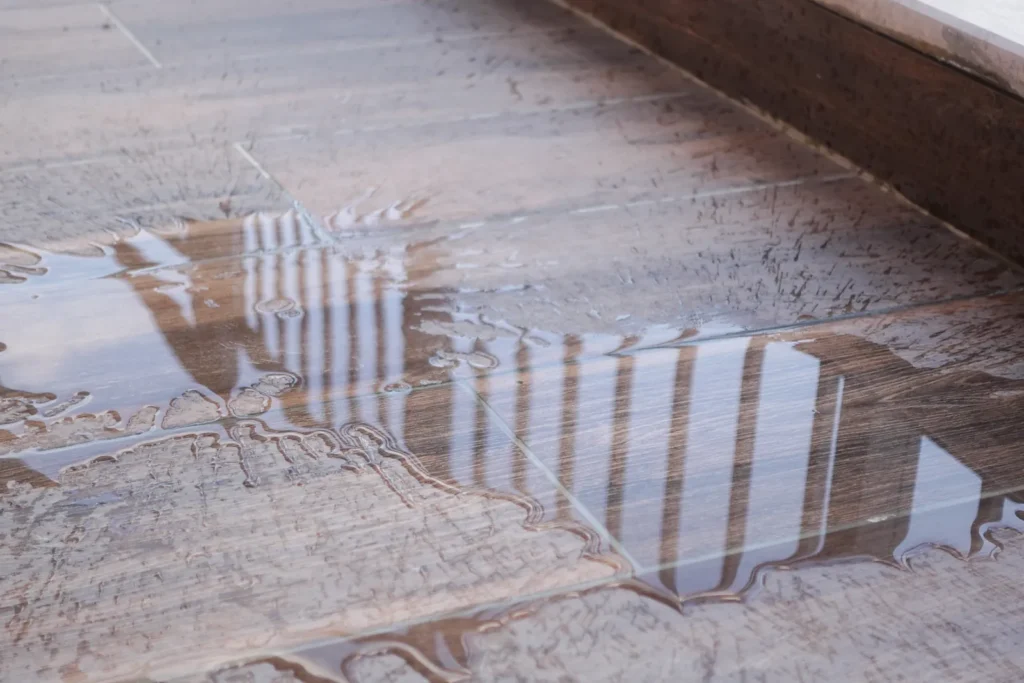
A balcony floor is meant to fall gently towards the floor trap or outlet, so rainwater runs off rather than sitting. If the fall is too shallow, or runs the wrong way in one corner, water collects in the low spot. You will often see the same puddle in the same place after every storm.
The floor trap or outlet is blocked
Leaves, soil from planters, hair, sand and grit wash into the outlet and build up over time. A partly blocked trap still drains, just slowly, so the balcony looks fine on a dry day and floods during a downpour. If water drains away much faster once you clear the grating, a blockage is likely.
A renovation changed the floor levels
New tiles laid over old ones, a raised threshold, a new screed or a changed door frame can all alter how water flows. The original slope may have worked, but the new surface no longer leads water to the outlet. In some cases the outlet ends up slightly higher than the area around it.
Things on the balcony hold water back
Heavy planters, artificial grass, outdoor mats, storage boxes and decking tiles can trap water and slow it down. They also hold dirt, which ends up in the outlet. Even an air-conditioner condensate pipe draining onto the balcony adds water every day.
What are the signs of a balcony drainage problem?
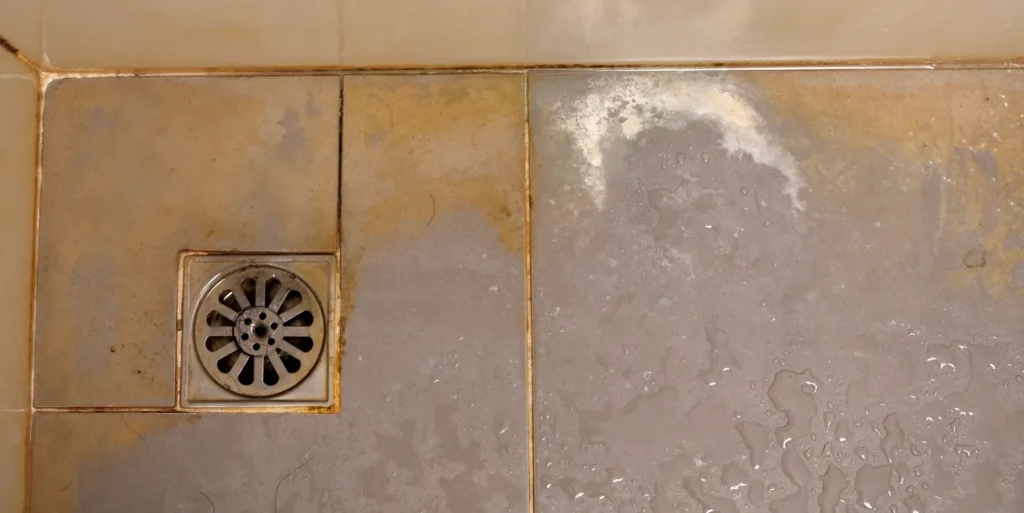
The clearest sign is water that stays on the floor for more than a short while after rain. Other signs include dark or crumbling grout, moss or algae in one spot, white powdery stains on tiles or walls, water creeping under the sliding door, and damp patches or stains on the ceiling of the unit below.
| Sign | What it can mean |
|---|---|
| A puddle that stays in the same spot after rain | A low spot in the floor, or a slope that does not lead to the outlet |
| Water draining slowly from the floor trap | A partial blockage in the trap or pipe |
| Water under the sliding door or at the threshold | Water is pooling against the door frame or the threshold seal has failed |
| Dark, soft or crumbling grout | Water is sitting in the joints and soaking through |
| Green or black growth along grout lines or corners | The area stays damp for long periods |
| White powdery stains on tiles or walls | Efflorescence: salts left behind as water dries out of concrete |
| Tiles that sound hollow when tapped | The tiles may have lost their bond with the screed, often after long exposure to water |
| A stain on the ceiling of the unit below | Water may be getting through the balcony slab, although the source still needs to be confirmed |


How does poor balcony drainage lead to leaks?
Standing water keeps soaking into the grout and the joints at the edges of the floor, where tiles meet walls, door frames and the parapet. Over many wet seasons it reaches the screed and the slab beneath. From there it can travel sideways before showing up as a ceiling stain below or damp skirting indoors.
That is why a balcony leak can seem to come and go. It may only show after long or heavy rain, when water has had time to sit, then fade during dry spells. The fault is still there, waiting for the next storm.
Pooling also wears out what is already in place. Grout breaks down faster when it stays wet, sealant joints lose their grip, and any existing waterproofing layer is put under strain for hours at a time.
How can you check your balcony drainage yourself?
You can learn a lot by watching your balcony after heavy rain. Note where water collects, how long it takes to clear and whether it drains faster once you lift the floor trap cover and clear any debris. Take dated photos. These simple observations help a contractor see the pattern quickly when they inspect.
Here is a simple routine:
- After a heavy downpour, walk the balcony and note where water collects.
- Time it. Check again after a while and note whether the puddles have shrunk or are still there.
- Check the outlet. Lift the grating, remove leaves and grit by hand (wear gloves) and see whether the water now drains away.
- Look at the edges. Check the grout and sealant where the floor meets the walls, the door frame and the parapet.
- Ask downstairs. If you are on good terms with your neighbour below, ask whether they have noticed stains or damp on their balcony ceiling.
Avoid pouring chemicals into the floor trap to clear it, as some products can damage pipes and seals. If the outlet still drains slowly after you clear what you can reach, the blockage may be further down the pipe.
What can you fix yourself, and what needs a contractor?
Clearing debris, keeping the floor trap clean and moving planters or mats are things most owners can do. Correcting the floor slope, adding or moving an outlet, replacing failed grout or sealant along the edges, and repairing hollow tiles need a contractor, because they involve the screed, the tiles or the waterproofing underneath.
| Problem | Usually DIY? | What is involved |
|---|---|---|
| Leaves, soil or grit in the floor trap | Yes | Clear by hand, then check it regularly |
| Planters, mats or decking holding water | Yes | Raise planters on feet, lift mats and keep the path to the outlet clear |
| Air-conditioner condensate draining onto the floor | Sometimes | Check the pipe is directed into the outlet, or ask your aircon servicing company to reroute it |
| Blockage further down the pipe | No | A plumber can clear it safely |
| Cracked grout or failed sealant at the edges | No | Removing and replacing grout and sealant properly, then sealing the surface |
| A floor that does not slope to the outlet | No | Re-screeding (relaying the cement layer) to the correct fall, which usually means removing tiles |
| Hollow tiles | No | Lifting and relaying the affected tiles on a sound base |
If the work involves hacking or re-tiling in an HDB flat, use a contractor listed in HDB’s Directory of Renovation Contractors and ask whether a permit is needed before work starts. In a condo, check your management corporation’s by-laws on renovation works and working hours before you book.
Why should drainage be fixed before balcony waterproofing?
Waterproofing helps stop water passing through the floor, but it does not change where water flows. If the floor still holds water after rain, any coating or membrane underneath it is under strain for hours at a time. Fixing the slope, the outlet or the blockage first gives the waterproofing a fair chance of lasting.
The order of work matters:
| Step | Why it comes here |
|---|---|
| 1. Find the source | Confirms whether the issue is drainage, the surface, the edges or the slab |
| 2. Fix the drainage | Clears or corrects the outlet and the slope so water runs off |
| 3. Repair the surface | Deals with hollow tiles, cracked grout and failed sealant |
| 4. Waterproof | Seals the repaired surface against the water that still lands on it |
Where the tiles are still firmly bonded and the slope is sound, non-hacking waterproofing can often seal the surface without breaking out the floor. Where the fall is wrong or the tiles are hollow, hacking is usually the honest answer. Our guide to hacking vs non-hacking waterproofing explains the difference. For the service itself, see our balcony waterproofing page.
What if water is reaching the unit below?
Speak to your neighbour early and keep things calm and factual. Take dated photos of your balcony after rain and of the stain below, note when it appears, and keep messages in writing. A joint inspection is easier when both sides have a record. If you cannot agree on responsibility, ask HDB, your condo management or a qualified professional what applies to you. If the stain is on a ceiling, our page on ceiling leak repair covers what to check next.
Frequently asked questions
Should a balcony floor be completely flat?
No. A balcony floor should fall gently towards the floor trap or outlet so that rainwater runs off. A floor that looks flat may still have the right slope, while one that looks fine can hide a low spot. Watching where water collects after rain is the easiest way to tell.
Can a waterproof coating fix water pooling on my balcony?
Not on its own. A coating helps stop water passing through the floor, but it does not move water to the outlet. If the slope or the outlet is the problem, that needs correcting first. The waterproofing then protects the surface against the rain that still lands on it.
How often should I clear my balcony floor trap?
Check it regularly, and more often if you have plants, trees nearby or a balcony that catches wind-blown leaves. It is worth checking before the Northeast Monsoon (December to March) and the Southwest Monsoon (June to September), and after any storm that leaves the floor wet for longer than usual.
Is artificial grass or decking a bad idea on a balcony?
Not necessarily, but both can slow drainage and hold dirt. Choose products that let water pass through, keep a clear path to the outlet and lift them from time to time to clean underneath. If water starts collecting, take them up and check the floor before it becomes a leak.
Do I need approval to fix my balcony drainage?
Clearing the floor trap or moving planters does not need approval. Work that involves hacking, re-screeding or re-tiling is different. In an HDB flat, use a contractor listed in HDB’s Directory of Renovation Contractors and check whether a permit is needed. In a condo, check your management corporation’s by-laws before work starts.
Getting your balcony checked
If water keeps pooling on your balcony, or a stain keeps coming back below it, it is worth having the source checked before anything is coated or hacked. WhatsApp us on +65 8800 0567 or book a site survey, and we will tell you what we find and what the balcony actually needs. You can also read our client reviews or see the full range of our waterproofing services.